|
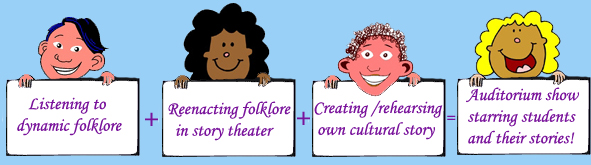
Our storytelling educator dynamically performs folklore with music, props, humor and
song; then guides the students in narration, games and theatrical
improvisation. The tales have themes in compassion,
individuality or beauty of the human spirit. Stories
are tailored to feature the
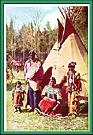
rich, diverse cultures of students: Latino, African, Asian and Native-American.
___________________________________________________
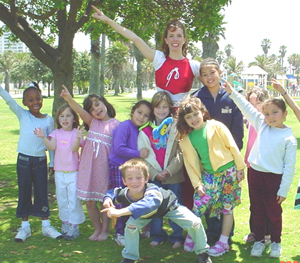
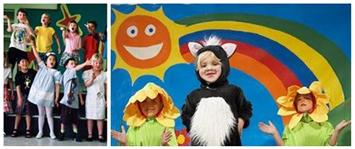
The children perform
in story theater,
embodying the journey of the characters and lessons. They repeat the
rhymes, sequences, tone and gestures of the characters. Fun,
educational theater games and improvisation help the children act out the
story and learn about theater. They also learn about parts of the stage,
plot and beginning, middle and end. Performance
Arts state standards per grade can be integrated in the sessions. Most importantly,
children perform folklore from diverse cultures! They can also perform
tales they have heard from their family and ancestors, breathing life into
the lost oral traditions of family and community.
Samples
of Folktales:
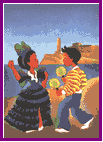
1. Latino Folklore: The
Barking Mouse (Cuba) or El
Conejito (Panama).
2. African Folklore: Little
Boy Frog and Little Boy Snake (Nigeria) or Anansi the Spider (West Africa).
3. Asian Folklore: The
Big Man Drum (China) or Roly,
Poly Rice Ball (Japan).
4. Native-American Folklore: Baby Rattlesnake's First Rattle (Pawnee) or Dog Tails (Iroquois).
Spanish/English stories can be included.
____________________________________________
The
motto? "Be the Hero of Your Own Story!"
After story time, the children
share how they relate to the various characters and themes of the
stories. By
discussing and relating to the universal themes of the tales, they develop
a sense of belonging that enhances self-esteem. This
also creates a vivid and meaningful connection to stories and their lives.
View our background in education.
View how Performance Arts state standards may be
applied.
|